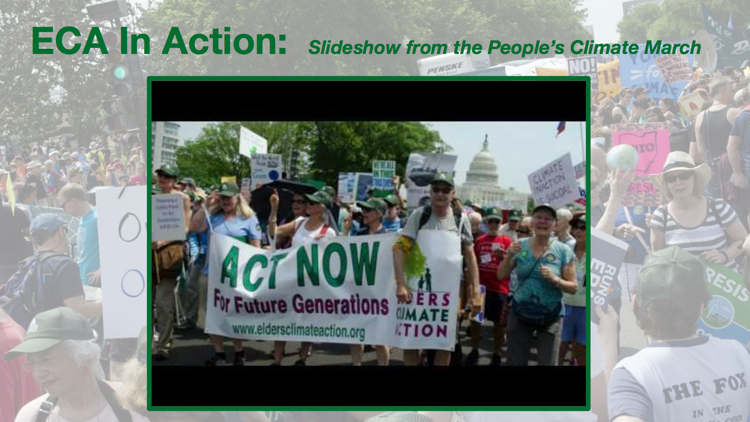
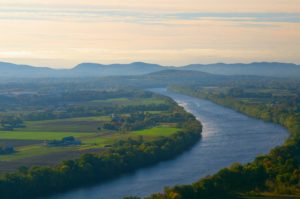
Cover Layout: Tyler Varian-Gonzalez, Photography: Landscape of the Connecticut River and Mount Sugarloaf[/caption]
Featuring:
- The Conservation of Matter
Meryl Natchez (poetry) - Minimalism, Re-Urbanization, and Smart Cities
Tyler Varian-Gonzalez (essay) - A THIMBY Update
contributions from Tom Webster (photo essay) - Raveling Travel
Eugene Berson (poetry) - A Secret of Ecological Planning: River of Silence
Luke Wallin (essay/ fine art) - Anagrammed Variations on the American Dream
Languacolonization
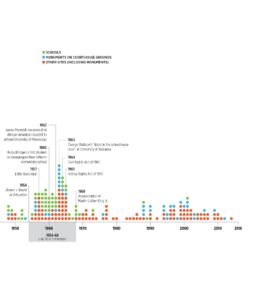
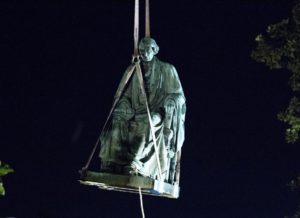
Yuan Changming (poetry) - What is Sustainable, What is Not, and What About all Those Monuments-
Charles Entrekin (photo essay) - Dream, 2017
Charles Entrekin (poetry) - Berkeley Publishing in the 1970s
Malcolm Margolin (essay) - Imagine there are people
Craig Czury (prose) - A Fox in the Hills
Demian Entrekin (short story) - Regret About the Goldbach Conjecture
James Woolery (poetry) - In a Word
Gary Cooke (humor) - 4.4 The Healing Issue–Call for Contributions
- Preview Excerpt of 4.4: The Healing Issue Sanctuary
William Larson (biography) - Elders Climate Action
John Sorenson (PSA)
 “The Conservation of Matter” arose out of a conversation with a beloved friend whose daughter had recently died. What happens when we die was for him at that moment in time a deep and furious renunciation of possibility. The poem was a response to that—a hope for an opening.




 I recall a scene years ago, in a college biology class, where the instructor was talking about how various life forms came to populate south sea islands separated by wide stretches of ocean. Certain spiders, he said, buoyed by what seemed to me a miraculous confidence, would climb trees, let out a strand of silk on the air until they were pulled into the sky on a breeze, headed who knows where. Not only would they sail over the ocean for miles, relying on wind currents to convey them to other islands that they had no assurances were even there, but they traveled backwards! All as part of life’s tendency to expand. For some reason this fact stuck with me all these years, finally emerging in this small poem, somehow expressing my life as a writer.

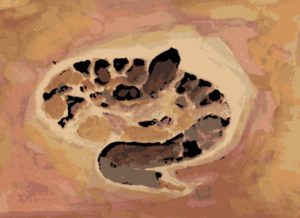
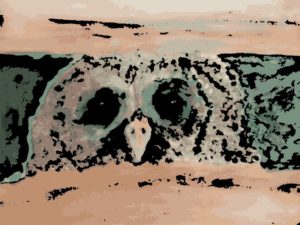


 Inspired by an article published in Asia Weekly which mentions ‘silent/listen’ as an example of anagram, I wrote this poem to make fun of the way important constructs like ‘American Dream’ and ‘democracy’ have been degraded as if in a game of anagram.
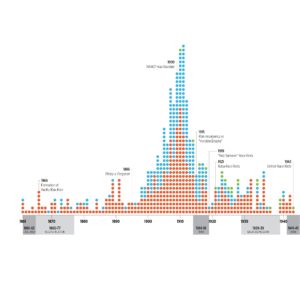



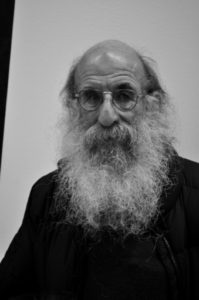 Why look backwards? There was a time when the events of the 1960s were thought to be some of the greatest conflicts we faced as a nation: The Free Speech Movement, Civil Rights, Women’s Rights, the Vietnam War (the most unpopular war up until that time), the draft and subsequent dodgers. There were so many changes in the world—we started the decade with JFKs motorcade through Dallas and ended it up on the moon. But things just keep moving faster and that era almost seems quaint in comparison to the turmoil today. Even though we have moved from the printing press to the information age, the hope is that journalistic integrity still endures, that blogs can be as relevant as the literary presses once were and that turmoil and conflict can inspire the art and beauty that arose out of the sixties. This is not just a nostalgic read, but an important reminder that great art and literature and beauty is what is sustainable about humankind. In these times of turmoil, sometimes it’s important to look back, as Malcolm has done, and see how literature and the arts grew out of a time of chaos. If you are interested in working on the upcoming project about Bay Area publishing, please note the contact information at the end of the article.—Ed.
 Imagine there are people who, when they are reading, that’s all they’re doing, just reading. I have friends who sit transfixed, as if transformed or transported to who knows where, comatose in front of their book. I tell my students if you’re going to be a writer, walk around with a hammer in your hand, wear a tool belt, carry a shovel or a flyswatter. To others, when they see us doing our most serious work, we look as if we’re doing nothing. The punishment is severe. They will hand us a shovel, or a scrub brush or a vacuum cleaner. At least, now that my pen’s active across the page, no one will bother me. I understand all of this, between the daydreamer and the poet. For me, once I wade into any strand of words, something inside me immediately starts speaking back. That’s when somebody else’s words spark my words. Somebody else’s story, sentence at a time, becomes huge openings for all of my stories. Memory has no chronology. Your line sparks my opening line, and, after all gets said and written, your book turns into my book. Imagine there are people who actually wait for another to stop talking before they speak.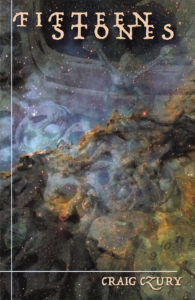
 This piece started with a casual conversation with a loquacious ex-military colleague who waxed about the ability to hunt for foxes on certain golf courses in certain states at night. He’s a hunter and relishes any exotic opportunity to do so. From there, the idea grew into a larger notion of wildness, ambition, habitat destruction and the free market dreams of “fixing the environment.” The rest just happens along the way.
  The Goldbach Conjecture, that every even integer greater than 2 can be expressed as the sum of two prime numbers, was first stated by the historian and amateur mathematician Christian Goldbach in a letter written in 1742 to Leonhard Euler (1707-1783). It is a nice example of why I find the theory of numbers so fascinating: very simply expressed ideas can resist proof for centuries.
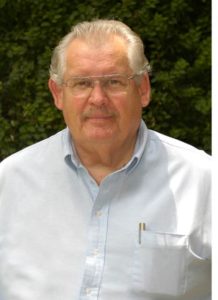 The following is a posthumous tribute to a fellow writer and friend. It is an entertaining, lighthearted letter about language written in 2007 but, with a few name and administration changes, could easily be relevant today. Gary sent this to me a few weeks before his passing because a blog post I had written in October 2016 called “Trumpery” reminded him of it.–Charles